Pentagon Big Tech Tesla Cybertruck may seem like a viral headline, yet there is a real and serious dialogue behind it: often frontline warfare, electric motors, non-public manufacturing companies, and how military employers think about fate threats will “exploit”. The more specific reality is more complicated: U.S. Air Force contracting files expressed interest in acquiring two Tesla Cyber trucks as part of a larger fleet of target vehicles to test for precision-guided munitions at the White Sands Missile Range in New Mexico. Reports say the cars are being used as targets, not reliable combat vehicles.
That element is important because the Cybertruck isn’t always just any other pickup truck. Its sharp design, stainless steel body, electric-powered platform, and futuristic public image make it a symbol that can come in with naval apprehension even after turning civilian technology into a legal weapon. The Pentagon studies what adversaries might use not just what the U.S. Navy plans to buy. In that sense, the Tesla Cybertrak becomes part of a larger defense question: what happens when the technology that is supposed to be commercially viable seems effective, durable, connected, and sufficiently widely diagnostic on battlefields?
1. Why the Pentagon Big Tech Tesla Cybertruck Story Went Viral
The story of the Pentagon’s big tech Tesla Cybertruck gained interest because it mixed three powerful names: Pentagon, Big Tech, and Tesla. Each sentence carries its own individual weight. The Pentagon represents military strength and nationwide security. Big Tech represents records, automation, synthetic intelligence, satellites, cloud computing, and surveillance. Tesla represents electric mobility, self-sufficient driving intentions, and Elon Musk’s disruptive commercial entrepreneurial vision. When these ideas collide in a headline, humans naturally imagine mysterious naval missions, armored electric-powered convoys, or futuristic battlefield machines .
But the proposed plan would not involve the Pentagon rolling out cybertrucks for the infantry. According to several defense and military vendors, the Air Force Test Center wanted two Cybertrucks among 33 composite vehicles for live-fire and precision munitions testing The Cybertruck was apparently chosen because officials assessed the possibility that adversaries might use such vehicles in the wild.
This is not uncommon in military deployments. Armed forces look at weapons for practical purposes because battlefields rarely look neat or predictable. In current conflicts, civilian vehicles are often modified, armored, or used for mobility, logistics, surveillance, or attacks. Pickup trucks, SUVs, motorcycles, commercial drones, and even ordinary consumer electronics have grown as part of the battlefield. The unusual frame and fabric profile of the Cybertruck make it a profitable object of observation and if the planners agree on the same engines, it will also appear in enemy arms .
It is therefore no longer surprising that Tesla is secretly building a fifteenth combat vehicle. The real miracle is that civilian technology is now so advanced and so visible that it should be included in the Navy’s contingency modeling. A vehicle designed for users could end up being relevant for defense certainly due to the fact that destiny enemies will probably purchase, modify or imitate it.
2. What Makes the Tesla Cybertruck Different From Normal Pickup?
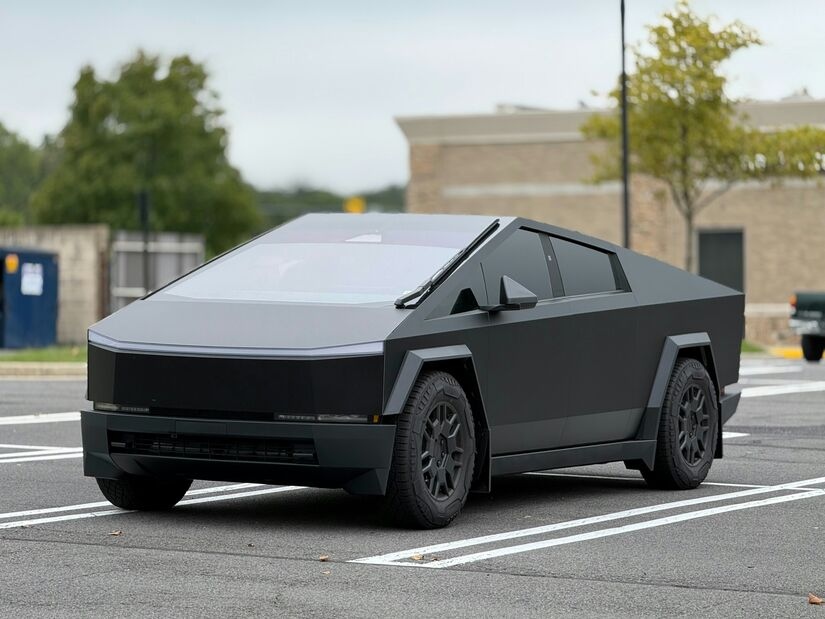
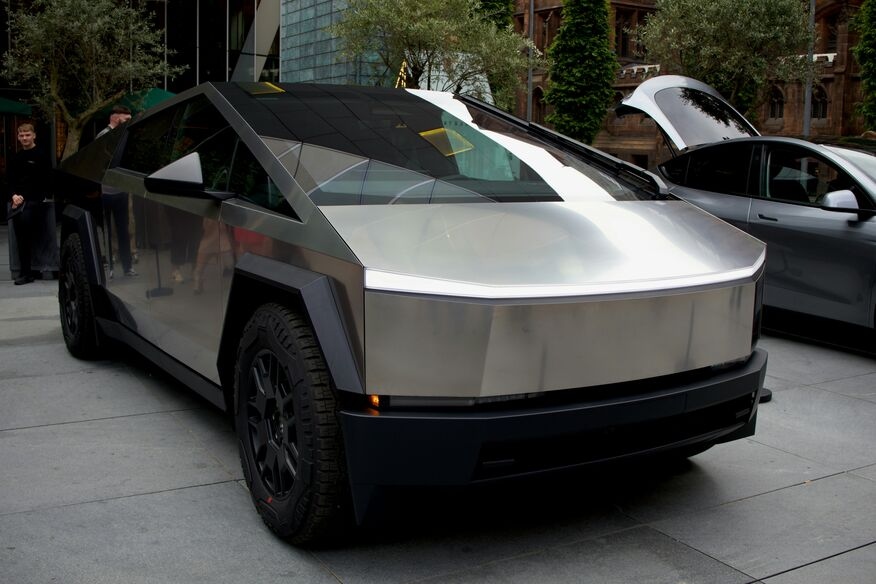
Its angular frame, stainless steel exterior, electric powertrain, steering-by-utility wire construction, and highly recognizable shape are Tesla respectable specifications that the Cybertruck is a large electric powered software car with a 6-foot to 4-foot configuration, the typical configuration. to 325 kW and fast charging capability
For typical users, those features broadly focus on style, overall performance, usability, and symbol recognition. For naval analysts, however, similar work improves on separate questions. How does the frame react to blast fractures? How does stainless steel behave outdoor compared to traditional painted steel or aluminum? How visible is the car to the sensors? How does this electrically powered platform affect the heat signature, noise, movement, or vulnerability? How hard would it be to turn it off?
Reports in Air Force Interest say the contract case highlights the Cybertruck’s “aggressively angular and futuristic design” and unpainted chrome steel exoskeleton as elements that set it beyond the conventional engine.
It doesn’t suggest that the Cybertruck is a tank. That no longer means it can defeat missiles. That doesn’t mean the battlefield is far from prepared. It honestly approaches from a conventional motor type enough that experimenters may want an actual program rather than assumptions. Speculating on test guns is dangerous. If anti-destiny is using a vehicle that behaves differently under the influence, the military wants to understand that before issues in the actual operation.
The Cybertruck also represents a sweeping shift: state-of-the-art citizen platforms are no longer accessible devices. They are software-defined sensor rich, connected, and upgradeable. That make them fascinating, versatile and strategically interesting at the same time.
3. Big Tech’s Growing Role in Defense and Security
The Big Tech Tesla Cybertruck conversation of the fifties cannot be understood without looking at the US Navy’s comprehensive date and time bands. Today’s defense environment is not limited to conventional arms manufacturers. Cloud providers, satellite TV for computing clusters, AI companies, cybersecurity startups, electric vehicle companies, robotics labs, and information analytics systems are all creating cutting-edge protection features .
Big tech is critical to defense because the war relies on a growing number of records. The party that sees first, understands first, moves first, and adapts first, gains many advantages. It requires sensors, cloud computing, secure communications, artificial intelligence, autonomous structures, and massive data processing. Companies that build devices for the civilian market can be strategically important even if they are no longer traditional marine contractors.
While Tesla hasn’t always been a conservationist, there are obvious connections to the broader Musk corporate environment and the government’s security debate, as SpaceX is deeply involved in Tesla’s field launches and satellite communications, the Pentagon, and a motivational history that includes acquisitions. By 2025, the Guardian reported, the US State Department had removed the word “Tesla” from buying advice for armored electric vehicles and changed the description to a broader “electric vehicle manufacturer”.
That incident shows why the public reacts violently to those stories. When non-public technology leaders have completed cars and satellites, rockets and AI.
The future of defense is likely to have more commercial technology, now not much less. The firm ensures that the military-certification of Big Tech equipment remains responsible, stable, legal, and strategically smart.
4. Military Plans: Is the Cybertruck Becoming a Battlefield Vehicle?
At this stage there is no credible evidence that the Pentagon is adopting the Tesla Cybertruck as smart battlefield vehicle. The said Air Force interest is for target testing, not deployment. Defense shops defined Cybertruks as part of a target fleet for precision-guided munitions testing, not as vehicles to drive U.S. troops into battle .
But the concept of an electric vehicle in military conditions is real. Soldiers around the arena are exploring electric mobility because electric vehicles can offer quiet speed, high torque, low temperature and noise signatures under certain conditions, and delivery of fuel in combat is a key weakness. Gaslighting convoys can be attacked, behind schedule, or disrupted. If power systems can reduce the desire for gas in certain roles, that’s attractive.
Still, EVs face critically demanding conditions on the battlefield. They need reliable charging infrastructure. They need to survive in harsh environment. They must perform in dust, heat, bloodless, dirt, digital conflict zones and broken road networks. Batteries can be vulnerable to fire, puncture, heat escape and long charging times. Navy needs to be maintainable under pressure, not just impressive on the showroom floor.
Cybertruck can also inspire dialogue, however, the idea is not always the same as adoption. A patrol car is not always robotically suitable for military service. Here, engines want shield applications, communications infrastructure, network recovery, modularity, electromagnetic shielding, payload flexibility, and proven reliability Cybertruck design can be exciting, but requires significant release before it can be taken seriously as a combat platform.
Extra practical military planning is not a “cybertruck for soldiers”. It is “understanding how new civilian vehicles behave on the battlefield”. It’s a much more reasoned and believable explanation.
5. Why the Pentagon Tests Civilian Vehicles
Pentagon Big Tech allows the Tesla Cybertruck to understand target tests to understand problems. Soldiers are looking at weapons against specific vehicle types because real enemies no longer use universally respectable military equipment. In many modern conflicts, irregular forces use civilian pick-up trucks, vehicles, SUVs, buses, and modified industrial systems. These engines can additionally carry weapons, adversaries, ammunition, drones, or communications equipment.
Precision guided ammunition is designed to hit specific targets while preventing unnecessary damage. To test them nicely, the army wants to have sensible target units. In addition to a missile that plays well against one type of car, it can cause one type of result against another. Vehicle size, type of steel, glass, wheels, interior, and fuel or battery system can all affect how damage occurs.
Reports say the Air Force wanted 33 target vehicles, with two Cybertrucks covered by the broader scheme. This shows that the Cybertruck has not been the entire focus of the test program. It was transformed into an unusual vehicle type in a wider set to symbolize potential real-world issues.
The electric-powered battery on the Cybertruck is also essential. Regular vehicles usually have gasoline or diesel fuel. Electric motors pack high-voltage batteries. There can be some kind of risk of being hurt, burned or broken. Understanding its implications for protection mission planning, and up-strike assessment.
Therefore there is no need to dismiss the story as a joke. While the title sounds banal, it is important to have good judgment behind the test. The navy prepares for international, where destiny threats additionally can make use of industrial electric powered cars, drones, satellite television for the pc network, AI equipment, and consumer-grade manufacturing in unexpected ways.
6. The Future Impact on Warfare, Mobility, and Security
The future impact of the Pentagon Big Tech Tesla Cybertruck debate goes beyond a single vehicle. It factors in near globally where the path between civilian innovation and military relevance is thinning. A product designed for wealthy consumers, tech lovers, or pickup users can still end up being strategically important if it adjusts ratings for mobility, durability, sensors, or battlefield visibility.
First, military planners will pay extra attention to business structure. Drones have already proven this lesson. Small industrial drones have become powerful tools for surveillance, targeting, propaganda, and attack. The same view could observe electric cars, autonomous vehicles, robotic transportation infrastructure, satellite terminals, and AI-powered cameras.
Second, preservation testing is more discrete and extra technical focused. Instead of pursuing most effectively old tanks or smart trucks, militaries can experiment against electric vehicles, related vehicles, autonomous ground robots, drones and hybrid civil-military systems The present time may need to know how things are going under the battlefield.
Third, Big Tech companies may also be under increased pressure on dual-use production. A “dual-use” approach allows the product to serve both civilian and military purposes. Satellite tv to pc network can join rural schools or battlefield equipment. The AI version can improve the productivity or intelligence rating of the company. An EV can serve a tribe, a police department, a logistics company, or a militia. As technology becomes more efficient, companies will face more difficult questions about who uses their products and how.
Fourth government may also want updated guidelines on procurement, ethics, and transparency. The public sector deserves clarity on when the non-public employer’s time is relevant to nationwide protection. Are the authorities buying the product? Check it? To regulate it? Accordingly, ? Compete with her? These questions assume that today’s technological power is concentrated in a small number of companies.
Finally, competitors will learn from the customer market. They no longer want to build every device from scratch. They could buy industrial drones, pilot cars, use encrypted apps, access satellite imagery, or use AI. The Pentagon’s interest in unconventional commercial vehicles reflects this reality.
7. Risks, Myths, and Misunderstandings Around the Cybertruck
The biggest misconception is that the Cybertruck itself is a naval grade vehicle because it seem futuristic. Looks can be deceiving. The sharp design and stainless steel body do not make the vehicle immune to fashion guns. Precision-guided munitions, anti-armor structures, mines, artillery pieces and heavy system guns far exceed conventional civilian durability standards
Another misconception is that the Pentagon has acquired Tesla’s main combat vehicle contract in the manner of Cybertrucks. The said purchase involved two Cybertrucks for target testing, with no fleet contract for battlefield deployment. That distinction must be clear.
0.33 The myth is that electric cars are either useless in war or perfect for combat. Both are extremely wrong. EVs can offer real advantages in some roles, notably quiet acceleration, instant torque and reduced fuel dependence. But beyond that, they have major problems with charging, battery safety, battlefield repair, and long-term operation. The military’s future is likely to include a combination of fuel cell vehicles, hybrid structures, power structures, drones, and autonomous devices.
There are also safety and reliability concerns. The Cybertruck has faced recalls and complaints, and the overall performance of an electric vehicle can depend on terrain, weight, temperature, and utility materials Tesla’s own commercial materials show the Cybertruck as a consumer electric utility vehicle, not a marine vehicle.
A responsible way to talk about this issue is to separate data from hype. Fact: The Air Force apparently wanted Cybertrucks for target testing. Fact: The Cybertruck has unusual materials and design. Fact: There are a growing number of applicable Big Tech defenses. Hype: Cybertruck is becoming America’s next battlefield truck. There is no solid evidence to describe it.
8. What This Means for Tesla, Big Tech, and the Public
For Tesla, the look of the Cybertruk is second only to every branding and prestige feature in defense-related discussions. On the one hand, it reinforces the notion that a vehicle is unique enough to attract the interest of the Navy. On the other hand, being used to it as a missile target is not always exactly the same as trusting it as a platform of war. History may be confused in many guidelines, but that really means limited.
The message to Big Tech is bigger. The Pentagon is watching industrial innovation closely. Vehicles, satellites, AI systems, cloud infrastructure, robotics, and sensors are all part of the modern defense environment. Companies that even after considering themselves as ordinary citizens can locate their companies mentioned in Defense Committees in increasing numbers.
For the public, this story is a reminder to read beyond viral headlines. The Pentagon Big Tech Tesla Cybertruck feels like a mysterious alliance, but the admitted facts show something extra special: The military is testing against potential targets. It still matters, but it’s not the same as a secret network gap here.
The impact of the future could be cultural as a whole here. People are realizing that customer generation is not live customer-most effectively. A phone can grow into a surveillance camera. A drone can be a weapon. Satellite tv to pc link can appear as a battlefield communique gadget. A truck may appear as look at the border. The Cybertruck is just one new symbol of this sweeping change.
Conclusion
The Pentagon Big Tech Tesla Cybertruck story is now surprising not because of the Cybertruck is set to replace the military Humvees, however because it shows how profoundly the civilian era is now affecting defense programs. The proposed interest of the Air Force to purchase a cybertruck for target testing at the White Sands Missile Range presents a genuine naval challenge: anti-destiny can additionally make use of unconventional processing engines, and the Pentagon wants to understand how precision guns work against them.
The Cybertruck’s stainless steel body, electrically powered platform, angular layout and cultural visibility make it a great symbol for this new generation. It sit at the intersection of Big Tech, mobility, retention testing, and public creativity. But the reality remains clean: Contemporary reporting helps with the concept of seeing cyber cars as targets, not deploying them as legitimate military vehicles.
The fate of the controversy includes additional commercial technology, more electric-powered platforms, more autonomous structures and the influence of more Big Tech. The Cybertruck can be useful as a supplement or in any naval role, but the larger lesson lies here. Modern battlefields are not built solely through governments and defense contractors. They’re also built on consumer technology, personal innovation, and unexpected ways a tool can be used in combat.