Hair porosity is easy to understand once you know the basic idea. It tells you how your hair takes in moisture and how well it keeps that moisture inside.
Low porosity hair usually works better with light products. A little gentle heat can help moisture enter the hair more easily. Medium porosity hair is usually easier to manage and a simple balanced routine is enough most of the time. High porosity hair needs more moisture because it can lose moisture quickly. It also needs products that help keep moisture in the hair.
The goal is not to make your hair perfect. The goal is to understand what your hair needs. When you know your hair porosity it becomes easier to choose products that actually work for your hair.
Start with a simple routine and notice how your hair feels. Do not change too many things at once. Make small changes slowly. Good hair care starts with understanding your own hair.
What Is Hair Porosity?
Hair porosity simply means how your hair takes in moisture and how well it keeps it. This moisture can come from water conditioner hair masks leave in products or oils.
Each hair strand has an outer layer called the cuticle. You can think of it like tiny layers covering the outside of the hair. If these layers are very tight moisture has a hard time getting inside. If they are too open moisture goes in quickly but it can also leave just as fast.
This is why the same hair product can work differently for different people. One person may use a product and get soft smooth hair. Another person may use the same product and feel dryness greasiness or heaviness.
Hair porosity helps you understand what your hair really needs.
Why Hair Porosity Matters

Hair porosity is important because it helps you understand how your hair reacts to products and moisture. Once you know your porosity you can choose better hair care routine.
Hair porosity can affect:
- How fast your hair gets wet
- How long your hair takes to dry
- How well conditioner works
- How much product your hair needs
- How dry or oily your hair feels
- How easily your hair gets frizzy
- How often you need deep conditioning
- How your hair reacts to heat and color
If your hair care routine is not working hair porosity may be the missing part.
Types of Hair Porosity
There are three main types of hair porosity:
- Low porosity hair
- Medium porosity hair
- High porosity hair
Each type has different signs and care needs.
Low Porosity Hair
Low porosity hair has tight cuticles. Because of this moisture does not enter the hair easily. Water or hair products can stay on top of the hair instead of going inside.
This types of hair can look shiny and healthy but still feel dry. The reason is simple. Moisture has a hard time entering the hair.
Signs of Low Porosity Hair
You may have low porosity hair if:
- Water sits on your hair before soaking in
- Your hair takes a long time to get fully wet
- Your hair takes a long time to dry
- Products sit on your hair and feel heavy
- Your hair gets buildup easily
- Oils can make your hair feel greasy
- Deep conditioner does not work well without heat
Low porosity hair needs light products and gentle warmth to help moisture enter.
How to Care for Low Porosity Hair
Low porosity hair usually likes light water based products because they are easier to absorb. Thick creams and heavy oils can stay on top of the hair and make it feel coated or heavy. When your hair feels like it has buildup use a gentle shampoo to clean it properly. Keep your routine simple and do not layer too many products at once. Conditioner works better on damp hair because it spreads more evenly. Warm water can also help a little before conditioning. You can use a shower cap during deep conditioning so the warmth helps moisture get into the hair more easily. Use a gentle shampoo when your hair feels heavy or coated. Try not to apply too many products at the same time. Apply conditioner on damp hair so it spreads easily and works better. Warm water can help open the cuticle a little. You can also use a shower cap while deep conditioning.
care tips for low porosity hair:
- Use lightweight leave-in conditioner
- Use water-based products
- Avoid too much heavy oil
- Clarify your hair when buildup appears
- Deep condition with gentle heat
- Apply products on damp hair
- Do not overload your hair with many layers
Low porosity hair does not need too much product. A small amount can work well.
Medium Porosity Hair
Medium porosity hair is often the easiest to manage. It has a balanced cuticle. Moisture can enter the hair and stay inside for a good amount of time.
This type of hair usually responds well to most products. It does not dry too fast or too slowly. It also holds styles better than low or high porosity hair.
Signs of Medium Porosity Hair
You may have medium porosity hair if:
- Your hair gets wet easily
- Your hair dries in a normal time
- Products absorb well
- Your hair feels soft after conditioner
- Your hair is not too dry or too oily
- Your hair holds moisture well
- Your hair is easy to style
Medium porosity hair is balanced but it still need care.
How to Care for Medium Porosity Hair
Medium porosity hair is usually easier to manage. It does not need a long routine or too many heavy products. A gentle shampoo and conditioner are enough for regular care.
Use a deep conditioner only when your hair feels dry or rough. Try to keep your routine simple so your hair does not feel heavy. Too much heat strong hair color and over washing can disturb the balance so use them carefully.
Good care tips for medium porosity hair:
- Use regular conditioner
- Deep condition once in a while
- Protect hair from too much heat
- Avoid harsh chemical treatments
- Use light oils if needed
- Keep a simple routine
- Watch for dryness or buildup
Medium porosity hair can become high porosity if it get damaged by heat, bleach, color or rough style.
High Porosity Hair
High porosity hair has open or damaged cuticles. This means moisture goes into the hair quickly but it also leaves quickly. Because of this your hair can feel dry frizzy rough and hard to manage.
High porosity hair can be natural for some people. It can also happen because of too much heat styling bleaching hair color sun damage or chemical treatments.
Signs of High Porosity Hair
You may have high porosity hair if:
- Your hair gets wet very fast
- Your hair dries very fast
- Your hair feels dry soon after moisturizing
- Your hair gets frizzy easily
- Your hair breaks easily
- Your hair looks dull or rough
- Products absorb quickly but do not last
- Your hair tangles often
High porosity hair need moisture and protection.
How to Care for High Porosity Hair
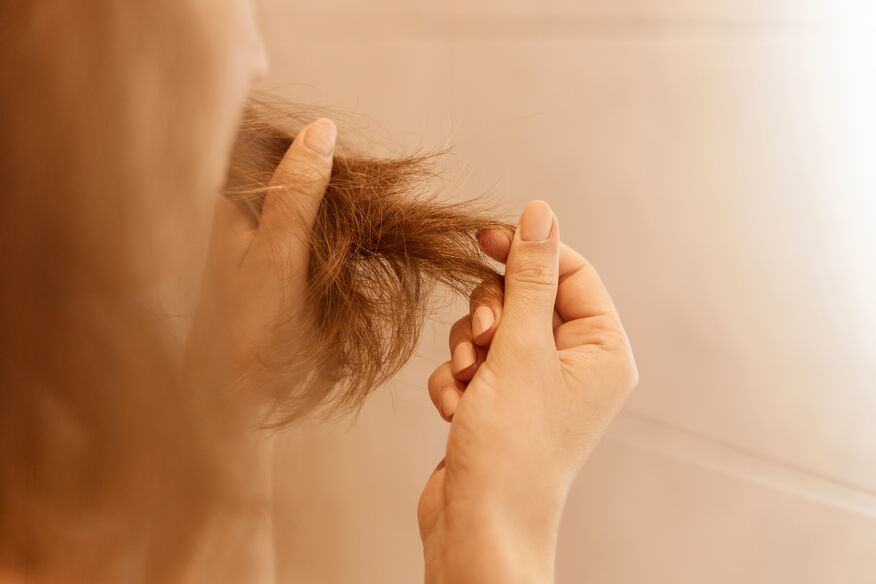
High porosity hair needs products that help keep moisture inside the hair. Rich conditioners leave in conditioners creams and sealing oils can help the hair stay soft for longer.This hair type can also benefit from deep conditioning. If the hair feels weak or damaged then protein treatment may help. But do not use protein too often because it can make some hair feel hard or dry.
Good care tip for high porosity hair:
- Use moisturizie shampoo and conditioner
- Deep condition regularly
- Use leave-in conditioner
- Seal moisture with oil or cream
- Avoid too much heat styling
- Use heat protectant if using heat
- Be gentle when detangling
- Try protein treatment only when needed
High porosity hair needs care that helps moisture stay inside.
Hair Porosity Test at Home
There are few simple ways to understand your hair porosity at home. These test are not perfect, but they can give you a basic idea.
The Water Float Test
Take one clean hair strand from your brush. Make sure there is no oil or product on it. Put the hair in a glass of water and wait for a few minutes.
If the hair stays on top of the water it may be low porosity. If it stays in the middle it may be medium porosity. If it sinks fast it may be high porosity.
This test is popular but it is not always fully correct. Product buildup hair thickness and natural oil can change the result.
The Spray Test
Take a small section of dry hair and spray some water on it.
If the water stays on top of your hair then you may have low porosity hair. If the water absorbs slowly and evenly then you may have medium porosity hair. If the water absorbs very quickly then you may have high porosity hair.
This is a simple test and it is useful for beginners.
The Drying Time Test
Pay attention to how long your hair take to dry after washing.
If your hair take very long time to dry then it may be low porosity. If it dries in a normal time then it may be medium porosity. If it dries very fast then it may be high porosity.
Low Porosity vs High Porosity Hair
Low porosity and high porosity hair are not the same. Both react to moisture in different way.
Low porosity hair has tight cuticles. Moisture does not enter it easily but when moisture gets inside it can stay for a longer time.
High porosity hair has open cuticles. It absorbs moisture quickly but it also loses moisture quickly.
Here is simple comparison.
| Feature | Low Porosity Hair | High Porosity Hair |
| Water Absorption | Slow | Fast |
| Drying Time | Long | Short |
| Product Feel | Can feel heavy | Absorbs quickly |
| Main Problem | Buildup | Dryness |
| Best Products | Lightweight | Rich and moisturizing |
| Best Care | Clarify and use heat | Moisturize and seal |
Best Products for Low Porosity Hair
Avoid using too much shea butter heavy creams or thick oils if they make your hair feel heavy.
igh porosity hair needs products that help lock in moisture. Rich conditioners leave in conditioners creams and sealing oils can help keep the hair softer for longer.
Look for:
- Lightweight leave-in conditioner
- Water-based moisturizer
- Gentle shampoo
- Light conditioner
- Aloe vera-based products
- Light oils like argan oil or jojoba oil
Avoid use too much shea butter heavy cream and thick oil if they cause buildup.
Best Products for Medium Porosity Hair
Medium porosity hair works well with many types of products. The main goal is to keep a simple and balanced routine.
Look for:
- Gentle shampoo
- Regular conditioner
- Light leave-in conditioner
- Occasional deep conditioner
- Mild hair mask
- Heat protectant
Medium porosity hair does not usually need complicated routine.
Best Products for High Porosity Hair
High porosity hair needs products that add moisture and protect it from damage.
Look for:
- Moisturizing shampoo
- Rich conditioner
- Deep conditioner
- Leave-in conditioner
- Hair cream
- Sealing oils
- Protein treatment when needed
High porosity hair often need more moisture than other hair type.
Common Hair Porosity Mistakes
Many people make mistake because they do not understand their porosity.
Common mistakes include:
- Using heavy products on low porosity hair
- Skipping conditioner
- Using too much heat
- Washing hair too often
- Not removing buildup
- Using protein when hair does not need it
- Not sealing moisture in high porosity hair
- Brushing hair roughly
- Expecting one product to work for every hair type
The best routine is the one that matches your hair needs.
Simple Hair Porosity Routine for Beginners
You do not need a long or expensive routine. Start with a simple one.
For High Porosity Hair
Use moisturizing shampoo and conditioner to keep your hair soft. Apply go away in conditioner after washing. Use a cream or oil to bind moisture. Severe conditions often avoid intense heat or chemicals.
How Often Should You Test Hair Porosity?
You do not need to test your hair porosity every week. Test it when your routine stops working or when your hair changes.
You may test your porosity after:
- Bleaching your hair
- Coloring your hair
- Heat damage
- Big weather changes
- Changing your hair routine
- Noticing more dryness or buildup
Your hair can also have mixed porosity. For example, your roots may be low porosity, while your ends may be high porosity because they are older and more damaged.
Conclusion
Hair porosity is not a problem at all. It just means how well your hair absorbs moisture and how long it holds that moisture inside.
Hair with low porosity generally likes soft products. A little bit of gentle heat can help get the moisture deeper into the hair. Hair with medium pores is easier to manage. Overall, you want a simple habit and not much heavy. Hair with higher porosity requires more moisture because it loses moisture faster. It also needs products that help retain moisture and protect the hair from damage.
The goal is not to make your hair perfect. The real purpose is to grab the hair. Once you have got the porosity of your hair it becomes less complicated to choose the merchant that will certainly give you the desired results.
Start with a simple exercise. Check how your hair feels after each product. Do not flip the entire section at once. Make small changes slowly. Good hair care starts when you examine what your hair wants.